
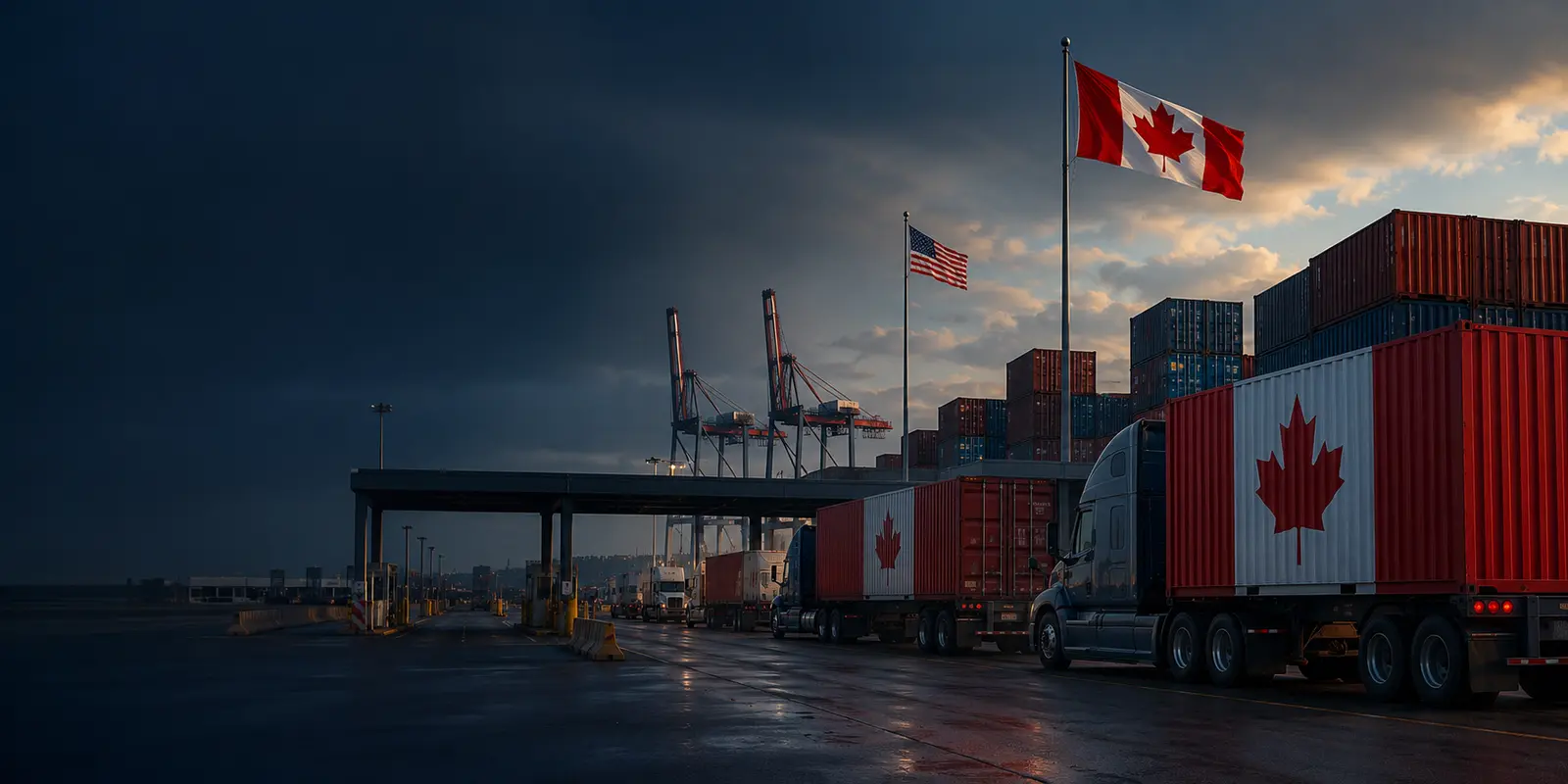
Canada Targets C$27.6 Billion of U.S. Goods With September 8 Counter-Tariffs
Canada published the product-level list for new 15%, 25%, and 50% duties. Separate U.S. updates affect export filings, Section 337 enforcement, and CBP authority in four coastal areas.
Published August 26, 2026
Canada will impose new counter-tariffs on listed U.S.-origin goods at 12:01 a.m. on September 8, 2026. The official list covers C$27.6 billion in imports and assigns rates of 15%, 25%, or 50% by Canadian tariff item. Importers should classify against Canada’s Customs Tariff, confirm U.S. origin, and separate goods that qualify for the in-transit exception.
Canada publishes the rates and product list for September 8
On August 25, Canada’s Department of Finance released the tariff-item list for its response to recent U.S. Section 338 and Section 232 measures. The new Canadian duties will apply to U.S.-origin goods in listed tariff items beginning at 12:01 a.m. on September 8. Canada says the covered trade totals C$27.6 billion and is concentrated in steel and aluminum, dairy, appliances, agricultural equipment, pulp and paper, plastics, electronics, furniture, clothing, fish, and seafood. Department of Finance product list and implementation details.
The highest rate applies to categories that include steel and aluminum products previously subject to 25% counter-tariffs, plus listed furniture and clothing. Listed appliances, dairy products, fish and seafood, and certain steel and aluminum derivatives are among the goods assigned a 25% rate. Existing Canadian counter-tariffs on U.S. autos remain in place. Canada’s August 25 countermeasure announcement.
The measures apply only to goods considered U.S.-origin under Canada’s marking-origin rules for CUSMA countries. Goods already in transit to Canada when the measures take effect are excluded. Canada said additional administrative instructions will be provided through the Canada Border Services Agency. The Canadian tariff-remission process also remains available for exceptional-relief requests.
CBP will make BIS license-tolerance response code 802 fatal
EEI filings can be rejected beginning September 25
CBP’s August 25 CSMS #69647661 changes AESTIR Commodity Response Code 802 from “Verify” to “Fatal” on September 25, 2026. The response is triggered when an EEI claims a BIS license and the license value reported in the filing exceeds 110% of the BIS license value. After the change, the submission will be rejected until corrected.
Export filers should compare AES/EEI values against the remaining BIS license value before transmission and investigate prior transactions that may already have decremented the license. The affected fields include the license value and the BIS license or authorization reference. This is an export-filing change; it does not by itself alter an import Entry Summary or add a Chapter 99 line.
USITC opens Section 337 investigation into melanoma tests
The USITC voted on August 25 to institute Investigation No. 337-TA-1519 concerning certain melanoma predictive and prognostic tests and components. The complaint, filed by Castle Biosciences, alleges unfair competition through false advertising in connection with imports or sales of the products. The named respondents include SkylineDx entities and QIAGEN entities. The complainant seeks a limited exclusion order and cease-and-desist orders. USITC News Release 26-124.
CBP establishes four customs-enforcement areas
CBP established four Customs-Enforcement Areas on August 25 in near-shore waters off South Florida, Central and Southern California, Puerto Rico, and the Gulf Coast of Texas. Within the defined areas, customs officers and agents may board and examine vessels, merchandise, documents, and people; bring vessels into port; and pursue seizures or arrests under applicable law. The action is aimed at hovering vessels used to smuggle cargo or people. CBP Decision 26-17, 91 FR 54800.
This declaration expands the geographic area in which CBP can exercise specified maritime enforcement powers. It does not announce a new tariff, quota, HTSUS classification, or routine ACE filing requirement. Vessel operators and maritime logistics providers working near the affected waters should keep manifests and supporting cargo documents readily available.
Action list for today
- For Canada-bound goods arriving on or after September 8, map products to the Canadian tariff schedule, confirm marking origin, and identify any in-transit shipment before the effective time.
- Export filers using BIS licenses should test for AESTIR response code 802 and add a pre-transmission check comparing EEI value with the license balance before September 25.
- Companies in the melanoma-test supply chain should monitor Investigation 337-TA-1519, while avoiding any assumption that an exclusion order already exists.
- Marine operators in the four coastal regions should review the Federal Register boundaries and confirm that vessel, manifest, and cargo records are accessible during an inspection.
What to watch next
- Canada Border Services Agency instructions on accounting, surtax calculation, and documentary treatment for the September 8 counter-tariffs.
- The USITC target date for Investigation 337-TA-1519, which must be set within 45 days after institution.
- The September 25 conversion of AESTIR response code 802 to fatal status and any related CBP or BIS technical clarification.
Frequently asked questions
When do Canada’s new counter-tariffs take effect?
They take effect at 12:01 a.m. on September 8, 2026.
Do the new Canadian duties apply to every shipment sent from the United States?
No. The goods must fall within a listed Canadian tariff item and qualify as U.S.-origin under the Canadian marking-origin rule. Goods already in transit when the measure takes effect are excluded.
What happens when AESTIR response code 802 becomes fatal?
An EEI filing that exceeds the BIS license-value tolerance will be rejected. The filer must correct the data before the submission can be accepted.
Does the melanoma-test Section 337 investigation stop imports now?
No. The USITC has opened an investigation but has not decided the merits or issued an exclusion order.
Sources and publication dates
- Department of Finance Canada — product list and implementation details, August 25, 2026.
- Department of Finance Canada — countermeasure announcement, August 25, 2026.
- CBP CSMS #69647661, August 25, 2026.
- USITC News Release 26-124, Investigation 337-TA-1519, August 25, 2026.
- Establishment of Four Customs-Enforcement Areas, 91 FR 54800, August 25, 2026.