
Daily Trade News · Policy & Compliance
Canada Trade Rules Shift
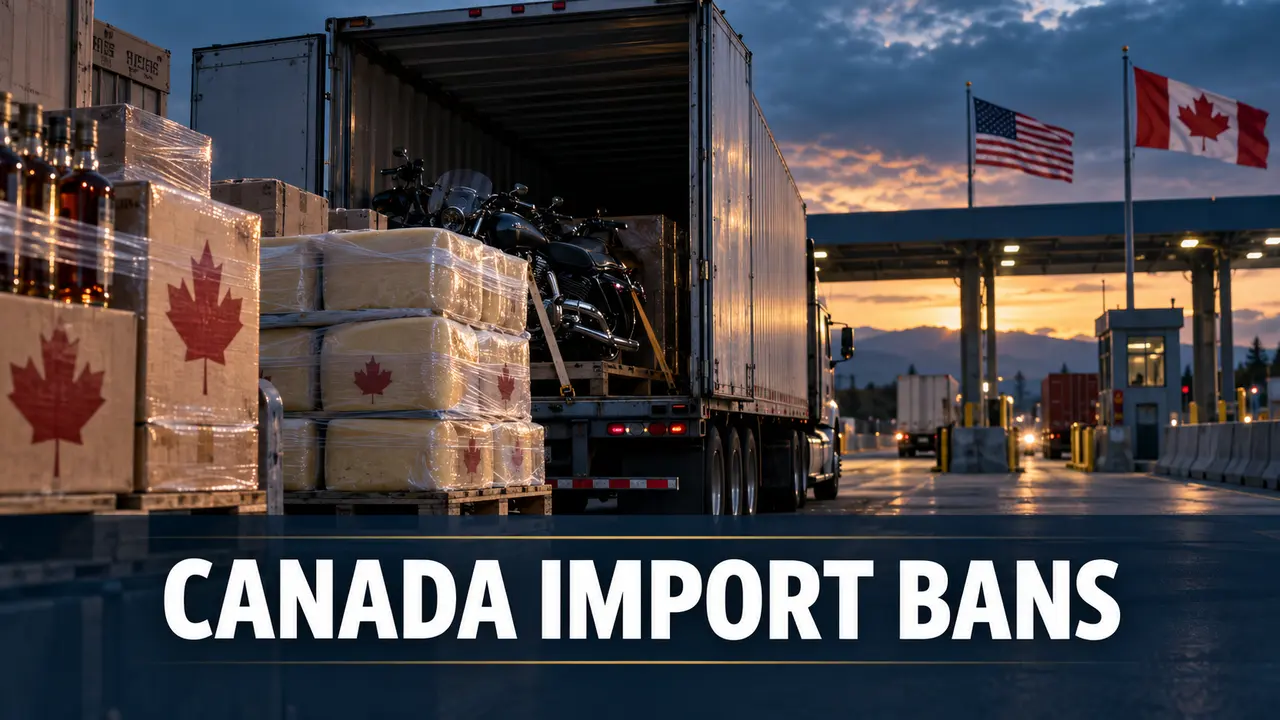
New U.S. import bans start September 29, while revised 50% Section 338 tariff lists take effect September 15.
September 9, 2026The White House has announced two separate compliance events for Canadian-origin goods: targeted prohibitions on specified products and earlier revisions to two existing 50% tariff lists. Importers should treat the dates, legal effects and product scopes as distinct.
Two dates, two different legal effects
| Date | Measure | Immediate compliance meaning |
|---|---|---|
| 12:01 a.m. ET, Sept. 15 | Scope changes to existing 50% duties under 9903.03.12 and 9903.03.14 | Added tariff lines become subject to the 50% Section 338 duty; removed lines leave those particular lists. The duties apply irrespective of USMCA origin and may stack with Section 232. |
| 12:01 a.m. ET, Sept. 29 | Three product-specific import prohibitions | Covered goods imported on or after the effective time are excluded from entry. Exact annex descriptions—not a category nickname—control. |
| Before Sept. 29 import; later entry | Transition treatment stated in the proclamations | Goods imported before the prohibition date but entered or withdrawn afterward are not prohibited solely by the new ban, but remain subject to the applicable 50% Section 338 duty. |
Primary sources (published September 8, 2026): White House fact sheet and the five linked presidential actions cited below.
September 29: targeted products excluded from importation
The proclamations create prohibitions, not merely higher duty rates. Country of origin, exact tariff classification and—in the alcohol action—whether the product is in a consumer or serving package will determine exposure.
| Action | Products identified in the annex | Status |
|---|---|---|
| Alcoholic beverages | Specified packaged products in headings 2203–2208, including beer, wine, cider and other fermented beverages, beverage ethyl alcohol, brandy, whisky, rum, gin, vodka, liqueurs and listed spirits. Packaging limitations in the annex are material. | Ban Sept. 29 |
| Dairy and other products | Listed whey tariff lines in 0404.10; invert molasses under 1702.90.35; specified cane and other molasses under 1703; and nonalcoholic beer under 2202.91.00. | Ban Sept. 29 |
| Motor vehicles | Motorcycles, mopeds and cycles with a reciprocating internal-combustion piston engine exceeding 800 cc, classified in 8711.50.00. | Ban Sept. 29 |
Primary sources: alcohol proclamation and annex; dairy/other-products proclamation and annex; motor-vehicle proclamation and annex (all September 8, 2026).
September 15: existing 50% tariff lists are revised
These actions modify product coverage under the already-established Section 338 measures. They do not create a blanket 50% tariff on every Canadian good.
| Existing reporting category | Examples added | Examples removed |
|---|---|---|
| 9903.03.12 Alcohol-discrimination list | Many cheeses; certain modified fats; raw hides, leather and furs; and specified motorboats. | Specified bulk whisky under 2208.30.6085 and bulk liqueurs under 2208.70.0060. |
| 9903.03.14 Motor-vehicle-discrimination list | Specified cheese, paper and paperboard, metal structures, aluminum articles, base-metal articles and welding materials; certain golf carts, small-engine vehicles and boats; seats, furniture, bedding and lighting. | Salt, Portland cement, certain sugars and paper products, refined lead, specified switchgear and fishing-rod parts/accessories. |
The 50% additional duty applies regardless of whether the goods qualify as originating under the USMCA. The proclamations also state that the Section 338 duty applies in addition to Section 232 duties where both regimes cover a product.
Primary sources: alcohol scope action, Annex I and Annex II; motor-vehicle scope action, Annex I and Annex II (September 8, 2026).
Plywood cases move toward AD/CVD orders
The U.S. International Trade Commission made final affirmative material-injury determinations covering hardwood and decorative plywood from China, Indonesia and Vietnam. The decision completes the injury phase and allows Commerce to issue antidumping and countervailing duty orders. Written scope language will control; the notice lists numerous 4412 tariff provisions only for customs convenience.
The Commission terminated the parallel investigations concerning softwood structural plywood after finding the relevant imports negligible. It also made negative critical-circumstances findings for the imports tied to Commerce’s affirmative critical-circumstances determinations in the identified China and Vietnam proceedings.
Practical effect: teams should map suppliers and products now, but should not substitute petition rates or determination rates for operative entry instructions. Load cash-deposit requirements only from the forthcoming Commerce orders and CBP instructions.
Primary source (published September 9, 2026): USITC determinations, 91 FR 57316.
Helmet and glow-fish-tape case remains under Commission review
In Investigation 337-TA-1442, the administrative law judge found a violation as to one safety-helmet patent but no violation as to another helmet patent or the asserted glow-fish-tape patents. The Commission is reviewing specified portions of the final initial determination and requested briefing.
No exclusion order or cease-and-desist order has been issued. The ALJ’s recommended limited exclusion order, cease-and-desist order and 100% bond are recommendations contingent on a final violation finding—not current border measures. Opening submissions are due September 18 and replies September 25.
Primary source (published September 9, 2026): USITC review notice, 91 FR 57343.
China steel grating: sunset finding is not a new deposit rate
Commerce’s expedited sunset review concludes that revoking the countervailing duty order on steel grating from China would likely lead to continuation or recurrence of countervailable subsidies at 62.46% for Ningbo Jiulong Machinery Manufacturing Co., Ltd. and all other producers/exporters.
The 62.46% figure is the rate Commerce selected for the sunset-review likelihood analysis. The notice does not, by itself, announce a new cash-deposit rate for current entries or revoke the existing order.
Primary source (published September 9, 2026): Commerce final sunset results, 91 FR 57297.
What importers should do now
- Run line-level Canadian-origin screening. Match classifications to the official annexes and separately identify packaged alcohol, whey/molasses, nonalcoholic beer and motorcycles over 800 cc.
- Control the two effective dates. Update duty logic for September 15 and establish a hold/escalation workflow for goods imported on or after September 29.
- Preserve timing evidence. Retain arrival, importation, entry and warehouse-withdrawal records for cargo near the September 29 transition.
- Recalculate duty stacking. Do not apply a USMCA-origin exemption to the specified Section 338 duties, and test whether Section 232 also applies.
- Wait for official operational coding. Do not invent a Chapter 99 number or entry procedure for the import prohibitions before CBP and the HTS record provide instructions.
- Stage downstream case updates. Prepare plywood product/supplier mappings, but implement deposits only from Commerce orders and CBP instructions; do not treat a recommended Section 337 remedy or the steel-grating sunset rate as operative.
Concrete watchlist
- CBP CSMS/ACE instructions for rejecting or reporting the three Canada import prohibitions.
- The next USITC HTS revision and its Modification Sources incorporating the September 8 actions.
- Federal Register publication, proclamation numbers and any technical corrections.
- Clarification of the unexplained dairy-scope cross-reference.
- Commerce AD/CVD orders and CBP instructions for hardwood and decorative plywood.
- The Commission’s final disposition in Investigation 337-TA-1442 after September 18 and 25 briefing.
Frequently asked questions
Are all Canadian imports banned?
No. The September 29 prohibitions cover only products described in the three official annexes. Other Canadian goods may still face existing or revised duties.
Do the tariff changes and bans start together?
No. The revised 50% lists start September 15 at 12:01 a.m. ET; the targeted import prohibitions start September 29 at 12:01 a.m. ET.
Does USMCA origin avoid the 50% duty?
No. The White House actions state that the listed Section 338 duties apply regardless of USMCA originating status.
What happens to goods imported before September 29 but entered later?
The proclamations say those goods are not prohibited solely under the new exclusion, but the relevant 50% Section 338 duty continues to apply.
Are the Section 337 remedy and 62.46% steel-grating rate immediately operative?
No. The Section 337 remedies are recommendations under review, and 62.46% is a sunset-review likelihood rate—not a newly announced current deposit rate.
Primary-source record
- White House, September 8, 2026: five Canada-related presidential actions and their annexes, linked in the Canada sections above.
- USITC / Federal Register, September 9, 2026: hardwood and decorative plywood final determinations; Investigation 337-TA-1442 review notice.
- Commerce / Federal Register, September 9, 2026: expedited steel-grating countervailing-duty sunset results.
This publication is for general trade-compliance information and is not legal advice. Product descriptions are condensed for readability; the controlling legal text, tariff classification, origin rules and agency instructions must be reviewed for each transaction.